Guide to Controlled Mechanical Ventilation

CMV: what it is and how it works

CMV (Controlled Mechanical Ventilation) is a technology developed to improve indoor air quality in modern, energy-efficient buildings. It is a ‘forced’ air-exchange system that operates 24 hours a day, all year round, replacing the manual opening of windows with two key differences: total control over air flow rates, to minimise air exchange and thus energy wastage, and higher air quality compared to the traditional method. In short: a high level of comfort with low energy consumption.

In a domestic mechanical ventilation system, air is extracted from utility rooms (kitchen, bathrooms, laundry room) along with its moisture, pollutants and odours; it is then filtered, passed through a heat exchanger and finally expelled outside. In the high-efficiency heat exchanger, almost all the heat is transferred to the fresh outdoor air, which is drawn in, filtered, treated (heated, cooled or dehumidified, depending on the season) and fed into the living areas (bedrooms, living room, study).
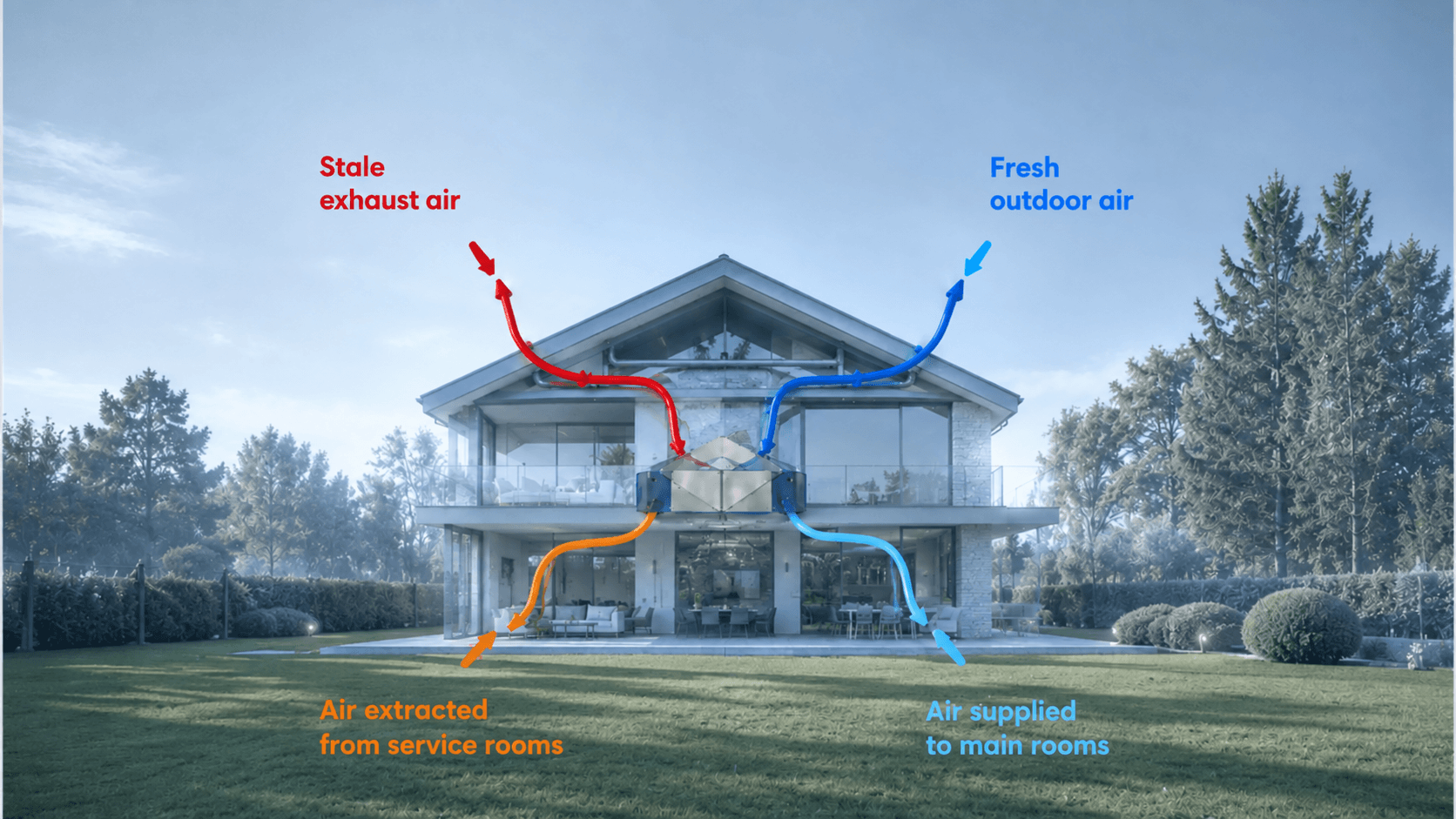
The most efficient mechanical ventilation systems consist of:

DUAL-FLOW HEAT RECOVERY UNIT
  • centralised extraction of stale air and supply of fresh air
  • airflows that never come into contact
  • energy recovery from exhaust air
+
AIR DISTRIBUTION SYSTEM
  • ducts
  • plenum
  • air vents

If there are several flats:

  • individual heat recovery system (each flat is completely self-contained)
  • collective heat recovery system (autonomous passive heat recovery and centralised fans)
  • centralised heat recovery system (a single unit serving the entire building)

Benefits of Controlled Mechanical Ventilation

Lower running costs

Costi di esercizio quasi insignificanti per tutta la vita dell’immobile, recupero dell’energia contenuta nell’aria espulsa (non più sprecata con l’apertura delle finestre) e corretto quantitativo di ricambio d’aria (non possibile con l’apertura delle finestre).

Greater comfort in the home

A continuous supply of fresh, filtered air, at the right conditions, into the home; the removal of pollutants and harmful substances, mould and odours; and the reduction of external noise caused by opening windows.

Greater value over time

The VMC system improves the building’s energy rating and helps maintain its value over time (for example, when selling or letting), partly by eliminating damp, mould, etc.

Lower environmental impact

Reduced dependence on traditional fuels, the availability of which is declining and the costs of which are rising steadily.

Applications and procedures

  • Detached and multi-family residential buildings
  • Offices and retail complexes
  • Schools
  • Wellness centres and gyms
  • Hotels and restaurants
  • Museums
  • Cinemas and theatres
  • Production environments
  • Supermarkets

The operating principle is the same across all applications: the unit can be installed on the floor, behind a wall or in a false ceiling. The VMC system is concealed, with the exception of the grilles and the air intake and exhaust vents in the rooms.

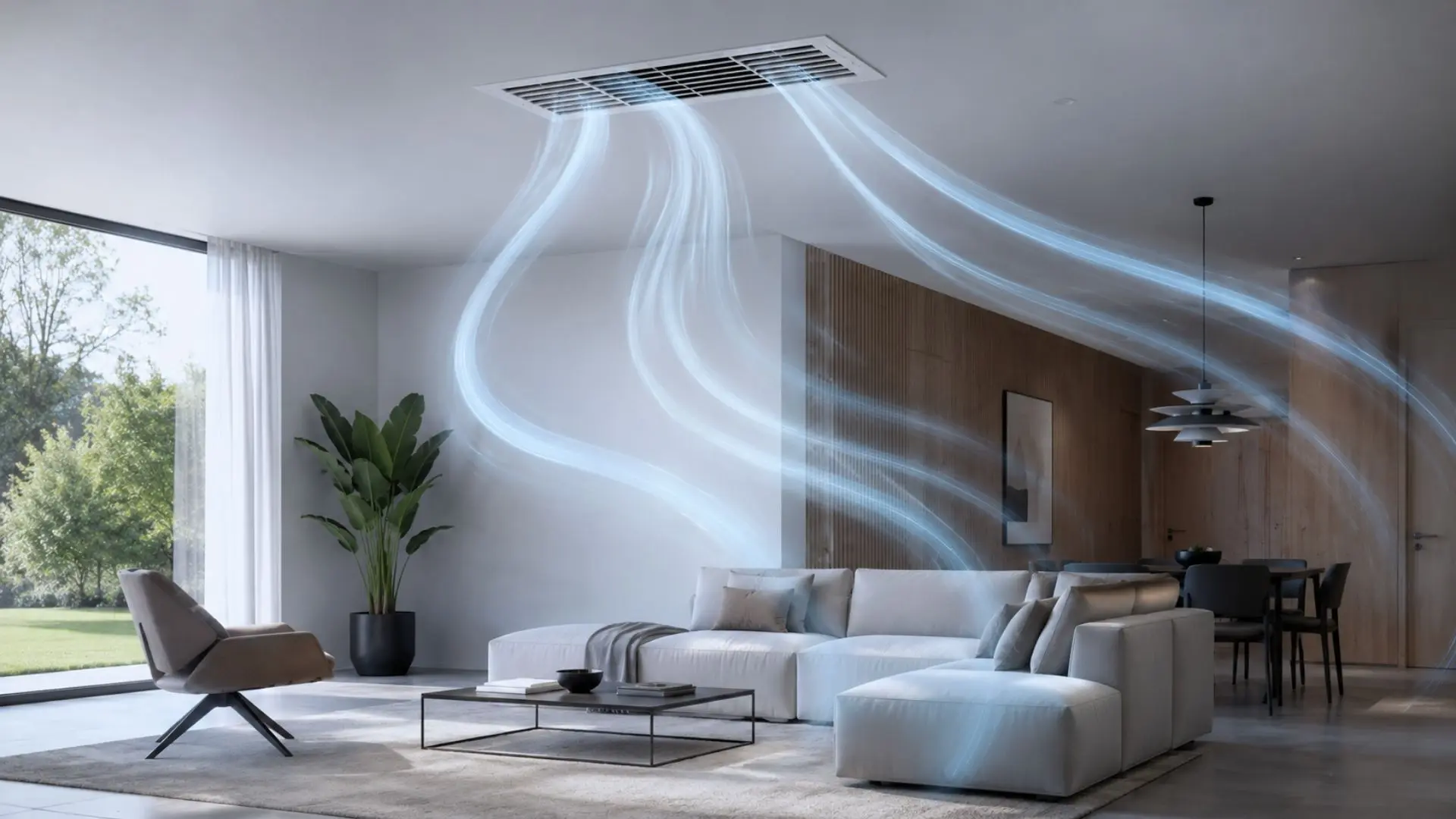
distribuzione aria fresca in ambiente residenziale
Winter

In the heat exchanger, the (cold) outside air to be supplied to the main rooms is heated by the hot, stale air drawn from the service rooms.

Winter, midday

During the middle of the day on particularly warm winter days, you can make use of the free-heating mode; the outside air (which is warmer than the air inside) is fed directly into the rooms without passing through the heat exchanger.

Summer

In the heat exchanger, the (warmer) outside air to be supplied to the main rooms is cooled by the air drawn from the service areas, which is stale but at a lower temperature than the outside air.

Summer, nights

Outdoor (cool) air is fed directly into the rooms without passing through the heat exchanger, in free-cooling mode (by-pass system, automatic opening/closing), whilst the warm air is expelled directly without transferring any heat.

CMV and passive buildings

Passive buildings – a concept applicable to all types of buildings, not just residential ones – are buildings that meet most of their energy requirements (heating, cooling, domestic hot water, ventilation and lighting) using a minimal energy source, that is, without any ‘conventional’ systems, but by utilising alternative sources. Dual-flow Controlled Mechanical Ventilation is an integral and indispensable part of the design and construction of new, modern passive buildings.

Some CLAUTEK units meet the requirements of the most stringent standards for energy certification of buildings, including those of the CasaClima protocol and passive houses.

casa moderna con impianti VMC efficienti
This site is registered on wpml.org as a development site. Switch to a production site key to remove this banner.