Mould is a fungus made up of filaments, known as hyphae, and grows in damp environments when it finds a surface suitable for growth. The presence of mould indoors can pose health risks and indicate the need to assess the room’s ventilation more closely.
What causes mould?
Mould originates and develops through spores, microscopic structures that enable fungi to reproduce. When environmental conditions are favourable, the fungus that forms mould releases spores and spreads, creating new filaments. As they are particularly light, spores are easily carried by the air, settling on new surfaces and proliferating.
The presence of spores in homes is normal and does not necessarily indicate the development and spread of mould. For spores to proliferate, the environment in which they are found must be favourable. The presence of moisture is essential for the fungus to grow; a particularly damp environment encourages the development of mould. In addition, the surface on which they are found must be rich in organic matter from which they can derive energy.
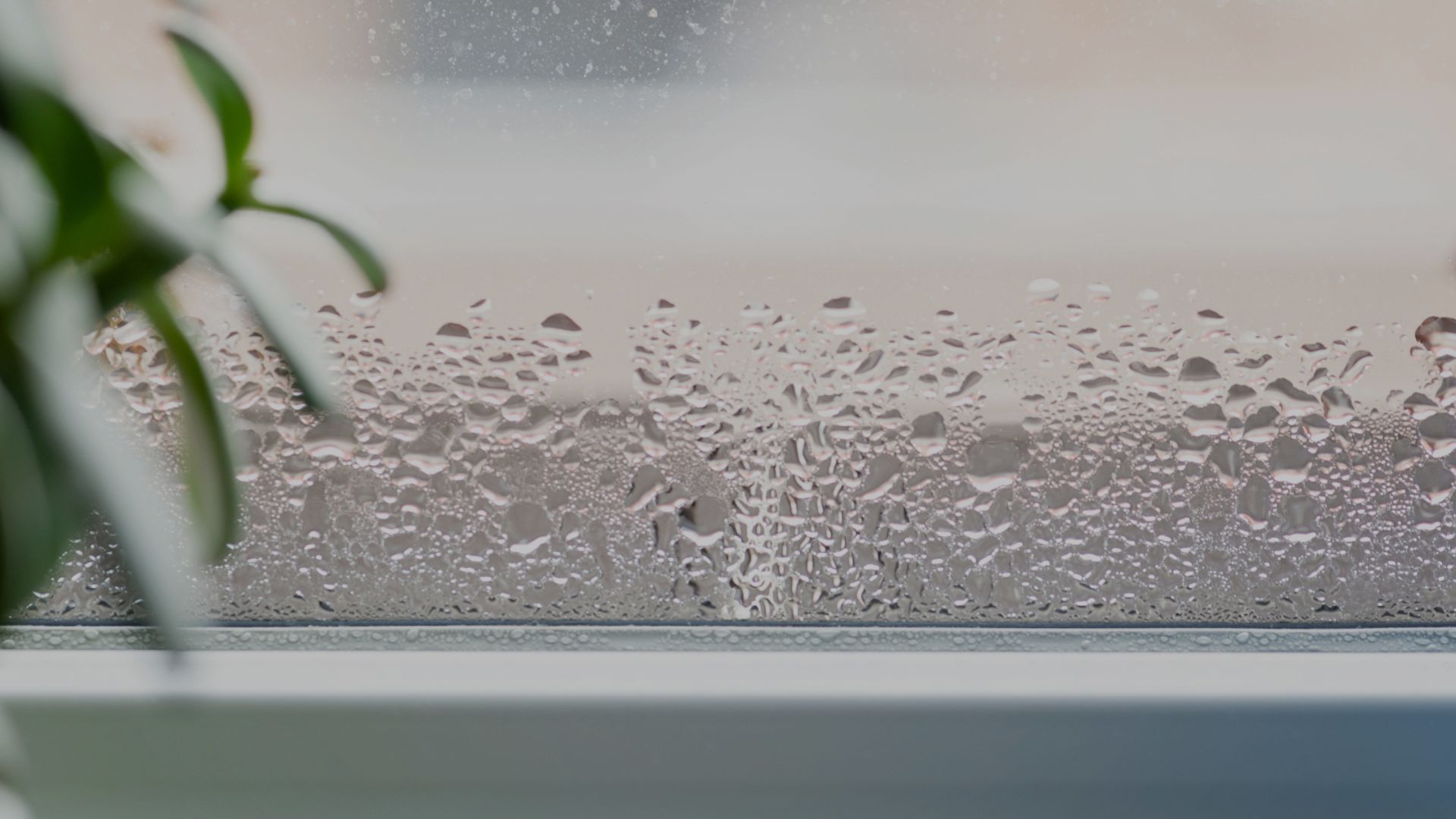
A home with a temperature of around 20°C and a relative humidity of 50% does not automatically imply the presence and spread of mould. In this case, there may be a wall that is much colder than the air, where the humidity level is likely to be higher. In that area, the likelihood of spores finding an environment favourable to their proliferation is much higher, and it is important to take the right measures to prevent the spread of mould.
Solutions to adopt
If mould is already present in the room, the first thing to do is to remove it, taking care not to spread it further. Once the room has been cleaned, to prevent mould from forming again, it is advisable to review the ventilation system.
A well-ventilated room prevents humidity levels from becoming excessive, thereby limiting the proliferation of spores and the spread of mould. Air can be exchanged simply by opening the windows, but in this case the air quality is uncontrolled and may contain smog and odours from outside. Using a ventilation unit allows for a more controlled air exchange and ensures better air quality. In this way, the air introduced into the room is properly filtered and, thanks to heat recovery, is maintained at an optimal temperature and humidity, preventing the spread of mould.
The presence of spores and the growth of mould should not be a cause for alarm; even in a well-ventilated room, patches may appear on some walls. This is because certain areas remain at a lower temperature than the surrounding air, leading to increased humidity. If the situation is kept under control – by cleaning any mould stains that form and using a suitable ventilation unit to ensure air exchange – no long-term problems will arise.